When the day came to leave, Gulliver took leave of the governor of Glubbdubdrib and returned to Maldonada with his two companions. After two weeks of waiting, a ship was ready for Luggnagg. The two gentlemen and some others kindly gave him provisions and saw him aboard.
The voyage took a month. They met one violent storm and had to steer west to catch the trade wind.
On 21 April 1708 they sailed into the river of Clumegnig, a port town at the south-east point of Luggnagg. Two pilots came aboard and guided them between dangerous shoals and rocks to a large basin just below the town wall, where they anchored.
Posing as a Dutchman
Some of the sailors, out of treachery or carelessness, told the pilots that Gulliver was a stranger and a great traveller. The pilots informed a customs officer, who questioned Gulliver very strictly when he landed.
The officer spoke the language of Balnibarbi, which was widely understood in that town because of the trade. Gulliver made his story as plausible and consistent as he could.
But he decided to hide his country and call himself a Hollander. He meant to go to Japan, and he knew that of all Europeans only the Dutch were allowed in.
So Gulliver said he had been shipwrecked on the coast of Balnibarbi, cast on a rock and taken up into Laputa. He was now trying to reach Japan, he said, to find a way home.
The officer said Gulliver must be confined until orders came from court. He would write at once and hoped for an answer within two weeks.
Gulliver was lodged in comfortable quarters with a sentry at the door. Still, he could walk freely in a large garden, and he was treated humanely at the king’s expense the whole time. Many people invited him out of curiosity, since he was said to come from very distant countries.
He hired a young man from the same ship as his interpreter. The young man was a native of Luggnagg but had lived some years in Maldonada and spoke both languages perfectly.
A greeting of dust
The answer from court came about when expected. It ordered a party of ten horsemen to bring Gulliver and his retinue to the royal city. His whole retinue was that one young interpreter, whom he had persuaded to come.
A messenger rode half a day ahead to tell the king Gulliver was coming. He asked the king to name a day and hour when Gulliver might have the honour of licking the dust before his footstool.
That was the court’s way of speaking, but Gulliver found it was more than a form of words. When he was admitted two days after arriving, he was ordered to crawl on his belly and lick the floor as he went. Because he was a stranger, though, the floor had been swept so clean that the dust was not offensive.
This was a special grace allowed only to people of the highest rank. When someone with powerful enemies at court was to be admitted, dust was sometimes scattered on the floor on purpose. Gulliver once saw a great lord with his mouth so full that when he reached the throne he could not say a word. Nor was there any help for it, since spitting or wiping one’s mouth in the king’s presence was a capital crime.
There was another custom Gulliver could not quite approve. When the king wished to put a noble to death in a gentle, indulgent way, he had the floor strewn with a deadly brown powder. Whoever licked it up died within twenty-four hours.
But in fairness to this prince’s great mercy and care for his subjects’ lives, Gulliver writes, this too must be said. Strict orders were given to have the poisoned parts of the floor well washed after every such execution.
Once a page whose turn it was to give notice about the washing deliberately failed to do it. As a result a promising young lord came to an audience and was poisoned, though the king had no designs on his life at the time. But this good prince was gracious enough to spare the poor page his whipping, on his promise not to do it again without special orders.
Eleven moons and a half beyond the sun
Gulliver crawled to within four yards of the throne and rose to his knees. He struck his forehead seven times on the ground and recited the words he had been taught the night before. It was the greeting the law requires of everyone admitted to the king.
It means this. May your celestial majesty outlive the sun by eleven moons and a half.
The king said something Gulliver could not understand, and he replied as he had been taught that his tongue was in the mouth of his friend. That meant he asked leave to bring his interpreter. For more than an hour after that, he answered the king’s questions.
The king was much delighted with his company. He ordered rooms at court for Gulliver and his interpreter, a daily allowance for his table and a large purse of gold for his expenses.
Gulliver stayed three months in that country at the king’s wish. The king favoured him greatly and made him very honourable offers. But Gulliver thought it wiser and more just to spend the rest of his days with his wife and family.
People who never die
The people of Luggnagg are polite and generous. Gulliver made many acquaintances among the best people, and with his interpreter always beside him, the conversation was pleasant.
One day, in a large gathering, a lord asked Gulliver whether he had seen any of their struldbrugs, or immortals.
Gulliver said he had not, and asked what such a name could mean when applied to a mortal creature. The lord explained.
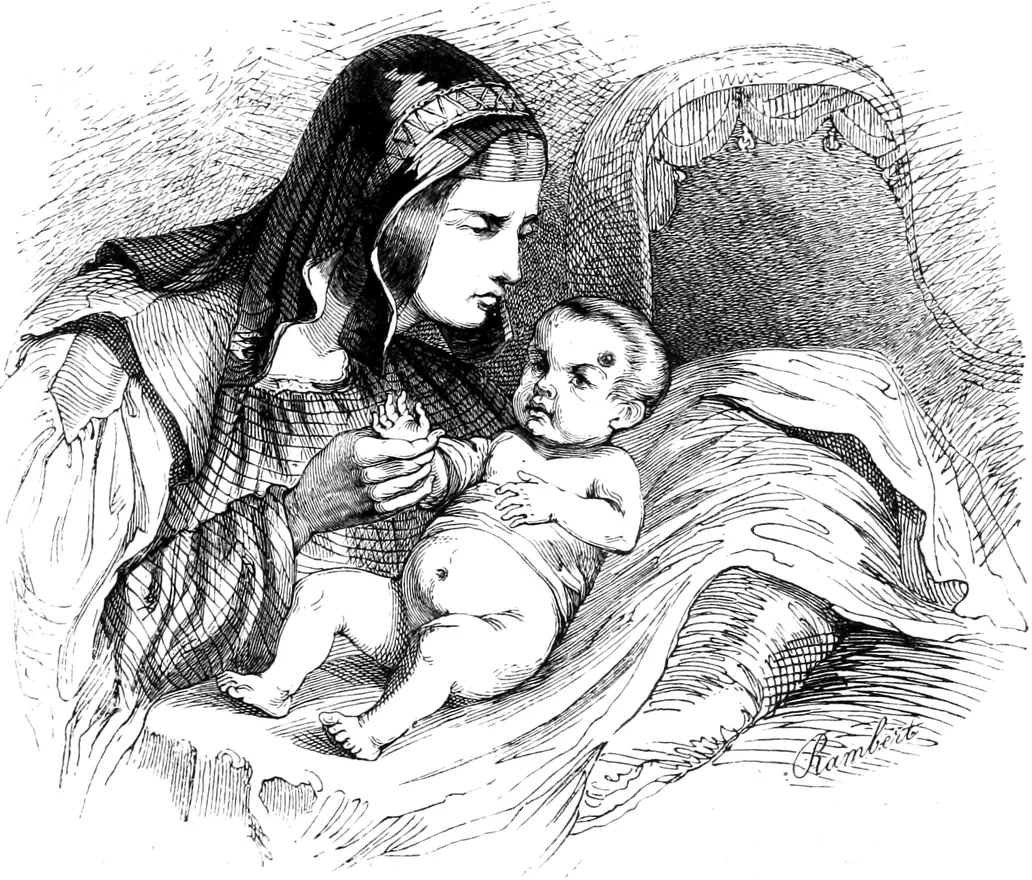
Very rarely, a child is born in some family with a red, round spot on its forehead, just above the left eyebrow. It is a sure sign that the child will never die.
At first the spot is about the size of a silver threepence, but it grows and changes colour. At twelve it turns green and stays so until twenty-five, then becomes deep blue. At forty-five it turns coal black and grows to the size of an English shilling, and after that it changes no more.
Such births were so rare, he said, that there could not be more than eleven hundred struldbrugs of both sexes in the whole kingdom. About fifty lived in the capital, among them a girl born some three years before. It did not run in families but happened by mere chance, and the children of struldbrugs died like everyone else.
A happy nation
Gulliver confesses that this account filled him with inexpressible delight. Since the lord understood Balnibarbian, he could not stop himself pouring out words that were perhaps a little too extravagant.
“Happy nation, where every child hath at least a chance for being immortal!” (Part III, Chapter 10)
Happy the people who enjoy so many living examples of ancient virtue, he cried. Happy the people with masters ready to teach them the wisdom of every past age. But happiest by far, he said, were those excellent struldbrugs. Born free of the great calamity of human nature, their minds would be free of the constant fear of death.
He said he was surprised not to have seen any of these illustrious people at court. The black spot on the forehead would be impossible to miss. So wise a king could not fail to keep such wise counsellors about him.
Perhaps, he added, the virtue of those reverend sages was too strict for the corrupt manners of a court. Young men are often too headstrong and flighty to be guided by the sober advice of their elders.
He resolved to give the king his opinion on the matter freely and at length at the next opportunity. And whether the king took his advice or not, he would gratefully accept the king’s offer to settle there. He would spend his life talking with those superior beings the struldbrugs, if they would have him.
If I had been born one
The lord listened to Gulliver with the kind of smile that comes from pity for the ignorant. He said he was glad of any reason to keep Gulliver among them. Then he asked leave to explain Gulliver’s words to the company.
He did, and the company talked among themselves for some time in their own language. Gulliver understood not a syllable, nor could he read from their faces what impression his words had made.
After a short silence the lord spoke. His friends were very pleased, he said, with Gulliver’s wise remarks on the great happiness and advantages of immortal life. And they wished to know in particular what plan of life he would have made if he had been born a struldbrug.
Gulliver answered that it was easy to be eloquent on so rich and delightful a subject. He had a habit of amusing himself by imagining what he would do if he were a king, a general or a great lord. And he had often run through, from start to finish, how he would spend his time if he were sure to live for ever.
Gulliver’s plan
Once he understood the difference between life and death and saw his own good fortune, he would first gather riches by every possible means. By thrift and good management, in about two hundred years he would be the richest man in the kingdom.
Second, from his earliest youth he would study the arts and sciences, until in time he excelled everyone in learning.
Last, he would carefully record every important public event. He would draw impartial portraits of each generation of princes and ministers. He would set down exactly the changes in customs, language, dress, food and amusements. With all this he would be a living treasure of knowledge and wisdom, and would surely become the oracle of the nation.
After sixty he would never marry, but live hospitably while still saving. He would also guide the minds of promising young men. From his own memory, experience and many examples, he would convince them of the usefulness of virtue.
But his chosen, constant companions would be his own immortal brotherhood. He would pick a dozen of them, from the most ancient down to his own generation. Those without fortunes he would house round his estate, and he would always have some at his table.
Among them he would mix a few of the most worthy mortals. Time would harden him to losing them with little or no regret, and he would treat their descendants the same way. It would be like a man who enjoys each year’s new pinks and tulips in his garden without mourning those that withered the year before.
He and the struldbrugs would share their observations and records through the ages. They would note each step by which corruption creeps into the world and oppose it at every step with constant warning and instruction. Added to their own strong example, this might well prevent the endless decline of human nature that every age complains of.
Things he wanted to see
Besides, he said, there would be the pleasure of watching states and empires rise and fall. Ancient cities would fall to ruin and obscure villages become seats of kings. Famous rivers would shrink to brooks, and the ocean would leave one coast dry and flood another.
He would see many unknown countries discovered. He would see barbarism overrun the most refined nations and the most barbarous become civilised. He would see the discovery of longitude, perpetual motion, the universal medicine and many other great inventions brought to perfection.
They might even outlive their own predictions and confirm them. Watching comets come and go and the motions of the sun, moon and stars change, what wonderful discoveries they would make in astronomy!
The natural desire for endless life and earthly happiness supplied him with many more topics, and Gulliver went on at length.
The company laughs
When he had finished, the gist was interpreted to the company as before. They talked a good while in their own language, with some laughter at his expense.
At last the lord who had interpreted spoke. The others had asked him to set Gulliver right on a few mistakes. He had fallen into them through the common weakness of human nature, so he was less to blame for them.
Today, what if I were
In this chapter Gulliver hears that there are people who never die, and lays out at length how he would live if he had been born one.
His plan was to gather wealth, master learning, record everything and teach the young. He would also hold back the corruption of the world with his immortal friends. He said he had a habit of imagining what he would do as a king or a general. The people of Luggnagg heard the plan and laughed.
If there is a “what if I were” I often imagine, what is missing from that picture?