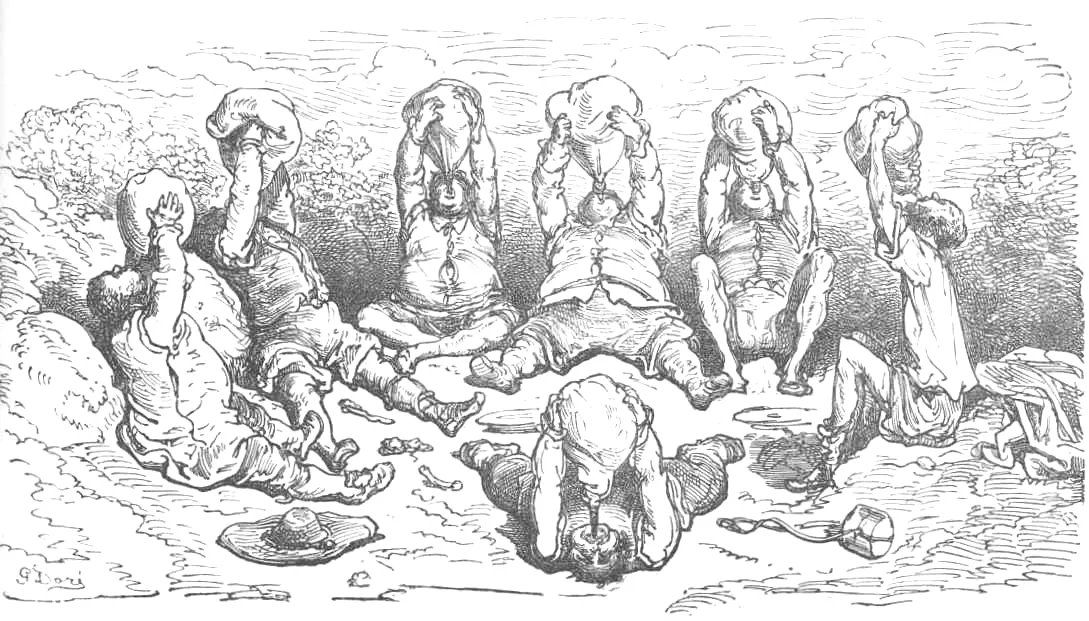
Sancho rode on his donkey to find his master, part glad and part sad. Being with his master, the narrator writes, pleased him more than governing every island in the world. He was not far from the island when six foreign pilgrims came along the road with their staffs, the kind who beg for alms by singing. They lined up in front of Sancho and sang in their own language. The only word Sancho could make out was “alms.”
He took out the bread and cheese from the island, half of each, and gave them, signing that he had nothing else to give. The pilgrims took it gladly and then cried, “Guelte! Guelte!” When one of them held up a money purse, Sancho understood they wanted coins. He made a sign that he had not a penny and urged his donkey on.
Just then one pilgrim, who had been studying him closely, rushed up and threw his arms around his waist. And he cried out in the clearest Castilian there could be. “Good heavens, who is this? Can it really be my dear friend, my good neighbor Sancho Panza, here in my arms?”